
Getting Started with Traditional Chinese Medicine (TCM) - Self-learning Guide by Dr. Ni Haixia
Updated: 5 days ago
Learning TCM is not about becoming a certain title; it is about learning to understand what your body is telling you.
Do you lack a formal academic background, a traditional mentorship, or even blocks of uninterrupted time?
TCM video lectures from the world-famous TCM practitioner, acupuncturist and lecturer Dr. Ni Haixia provide an accessible gateway for those choosing to self-learn TCM. We present these contents here to serve as a reference for others on the same self-learning path.

The sequence of self-learning TCM recommended by Dr. Ni:
Note: It will take some time for us to translate all the materials of Dr. Ni into English, subscribe to our mailing list or English subtitle YouTube channel for the latest updates.
Step 1: Start with Acupuncture to Solidify the Foundation of Meridians and Viscera
Study acupuncture first because the meridians are the "map" of TCM. Dr. Ni’s original words were: "If a TCM practitioner does not understand the meridians, opening their mouth and taking action will be wrong." By walking through the twelve meridians first, you will later understand where the medical properties of herbs and formulas are heading when you study materia medica and formulas.
Therefore, Dr. Ni’s advice is to start with acupuncture rather than the Yellow Emperor's Inner Canon. This is because acupuncture is a relatively easy subject to learn and master, while encompassing various fundamental concepts and applications of TCM.
The foundation of acupuncture covers the twelve meridians, as well as the various corresponding relationships between the five viscera and six bowels. For instance, the liver corresponds to the color green and the eastern direction; the heart corresponds to fire, the southern direction, and the color red, and so on. These are explained in great detail within the Great Compendium of Acupuncture and Moxibustion.
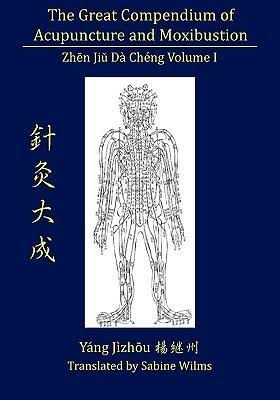
The twelve meridians themselves are directly related to the viscera and bowels. For example, among the twelve meridians are the Foot-Terminal Yin Liver Meridian, Foot-Minor Yang Gallbladder Meridian, Foot-Greater Yang Bladder Meridian, and Foot-Minor Yin Kidney Meridian, etc.
Furthermore, there is an interior-exterior relationship between the viscera and bowels; for instance, the kidney and bladder are interior-exterior to each other, corresponding respectively to the Foot-Minot Yin Kidney Meridian and the Foot-Greater Yang Bladder Meridian—one is Yin, and the other is Yang. These two meridians relate to the exterior and interior.
Thus, when we speak of the interior-exterior relationship between the zang (viscera) and fu (bowels), there are two related meridians—one Yin and one Yang—supporting, generating, and restraining each other. This generates a state of Yin-Yang balance, which constitutes our twelve meridians.
At the same time, the trajectory of the meridians is crucial, as are the locations and functions of the acupuncture points, which help us differentiate patterns of illness. For instance, the appearance of a painful point with pressure over a specific acupuncture point can assist us in diagnosing whether its corresponding viscus or bowel is experiencing problems, helping us understand the origin of the disease.
Aside from the twelve meridians, there are also the Eight Extraordinary Meridians. Through the mutual connection and cooperation of these meridians, we humans are able to exist as an integrated whole.
Step 2: Learn the Shennong's Classic of Materia Medica to Comprehend the Yin-Yang Essence of Drug Properties
The purpose of studying the Shennong's Classic of Materia Medica (also known as The Divine Farmer's Classic of Materia Medica) is to learn the inherent nature of various herbs.
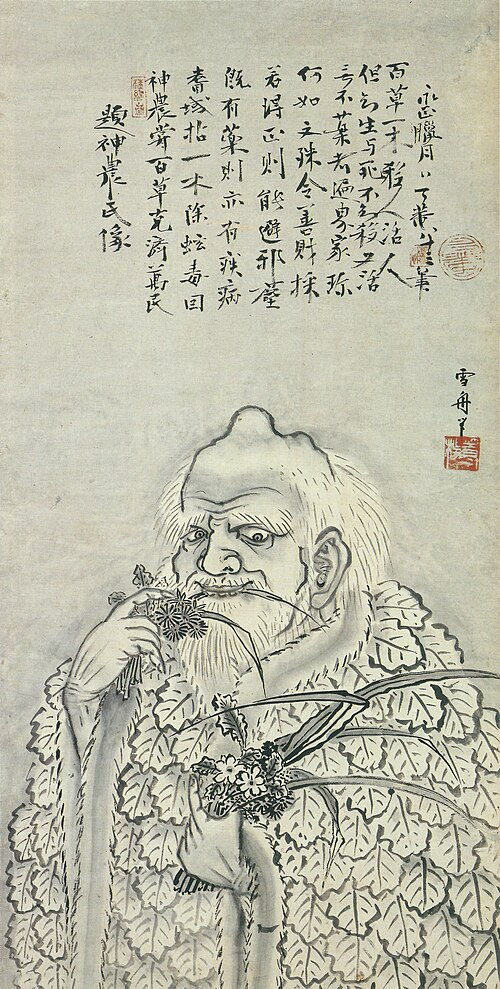
Regarding the descriptions of herbs, this classic speaks very simply. For example, it notes that a certain herb is cold in nature, or that another herb is bitter in taste.
In the introductory sections of this classic, there are foundational explanations concerning medicinal properties—such as sweet and bland herbs draining and dissipating dampness, pungent and sweet herbs scattering and dispersing, sour and bitter herbs inducing emetic and cathartic actions, and how to differentiate Yin and Yang.
Moreover, the hundreds of medical substances mentioned in the Shennong's Classic of Materia Medica are readily available everywhere.
In addition, Dr. Ni incorporated a vast amount of commentary on these medicines by successive generations of physicians into his lectures on the classic. Using the years of accumulated experience of our predecessors in treating and saving lives, this greatly enriches the content of the Shennong's Classic of Materia Medica and facilitates learning for later generations.
Step 3: Learn the Yellow Emperor's Inner Canon to Construct a Holographic View of Life
Once you have established a foundation in acupuncture and materia medica, studying the Yellow Emperor's Inner Canon will help you understand why it discusses cold and heat, and what it is actually addressing. Its contents encompass physiological anatomy and pathology, with numerous chapters and an extensive text. Among these TCM classics, its original text is relatively long.

When reading this classic, people generally read it textually. However, Dr. Ni encourages everyone to read it as a diagram, because its textual descriptions are more effectively understood as a diagram. When looking at the diagram, the entire body begins to virtually move in harmony, allowing one to observe the operational pathways inside a living human body.
Consequently, the space for imaginative visualization is quite large because it can now be visualized. As we carefully contemplate and comprehend this diagram ourselves, the diagrams become our own. Thus, we can see very clearly what relationships of mutual generation and restriction look like.
Through the text, we must build a holographic panorama and immerse ourselves into it to experience it.
Without a foundation in acupuncture and the Shennong's Classic of Materia Medica, reading the Yellow Emperor's Inner Canon is essentially just looking at words. Moreover, it feels like reading a heavenly book without words, making it completely incomprehensible.
Therefore, with a solid foundation in acupuncture, coupled with the foundation of the Shennong's Classic of Materia Medica, one can read the Yellow Emperor's Inner Canon thoroughly.
In other words, with a deep understanding of the Yellow Emperor's Inner Canon, you will naturally prescribe Cinnamon Twig Decoction or Ephedra Decoction when encountering a case without even looking at the Treatise on Cold Damage Disorders and the Essential Prescriptions of the Golden Cabinet written by Zhang Zhongjing.
You will understand at a glance why he formulated them that way when you subsequently look at the two classics he left behind.
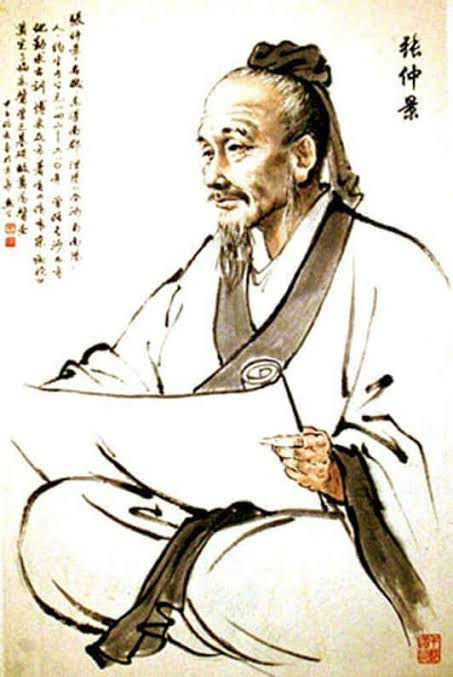
Step 4: Delve into the Treatise on Cold Damage Disorders to Master the Six-Meridian Syndrome Differentiation System
Beginning to study the Treatise on Cold Damage Disorders signifies the start of learning pattern differentiation and the application of classical formulas for various diseases.
Zhang Zhongjing utilized the six-meridian approach (Greater Yang, Bright Yang, Minor Yang, Greater Yin, Minor Yin, and Terminal Yin) to describe and differentiate the location of diseases, cold and heat, deficiency and excess, and their developmental trends. These serve as the six basic guiding principles for learning how to formulate herbal prescriptions and treat illnesses.
Basic Concepts and Classification of Six-Meridian Pattern Differentiation:
Three Yang Diseases (Greater Yang, Bright Yang, Minor Yang): Mostly belong to exterior, heat, and excess patterns, reflecting a state of healthy Qi fighting against pathogenic factors and a hyperactive state associated with the conditions.
Three Yin Diseases (Greater Yin, Minor Yin, and Terminal Yin): Mostly belong to interior, cold, and deficiency patterns, reflecting a state of insufficient healthy Qi and declining bodily functions.
Core Content of Six-Meridian Pattern Differentiation:
Greater Yang (Taiyang) Disease: The shallowest disease location, governing the exterior. Common signs include fever, aversion to cold, and a floating pulse.
Bright Yang (Yangming) Disease: Exterior pathogens entering the interior and transforming into heat. It governs the interior, excess, and heat. Common signs include high fever, profuse sweating, intense thirst, surging/flooping pulse, or constipation.
Minor Yang (Shaoyang) Disease: Half-exterior and half-interior. Common signs include alternating chills and fever, a bitter taste in the mouth, a feeling of fullness and oppression in the chest and hypochondrium, and a lack of appetite.
Greater Yin (Taiyin) Disease: Spleen-Yang deficiency and decline with interior cold. Common signs include abdominal fullness with vomiting, inability to keep food down, spontaneous diarrhea, and periodic abdominal pain.
Minor Yin (Shaoyin) Disease: Heart and Kidney Yang decline or Yin deficiency, characterized primarily by a faint/minute pulse and a constant desire to sleep (somnolence).
Terminal Yin (Jueyin) Disease: Intertwining of Yin and Yang, complex cold-heat patterns. Common signs include insatiable thirst, upward surging Qi rushing toward the heart, heat pain in the chest, and hunger accompanied by an aversion to eating.
Forms of Disease Transmission:
Including sequential meridian transmission, skipping meridian transmission, interior-exterior transmission, combined diseases, concurrent diseases, and direct strike.
Significance of Clinical Application:
Not only applied to externally contracted cold damage disorders, it also widely guides modern internally-generated miscellaneous diseases, tumors, and various clinical departments.
When the Greater Yang (Taiyang) meridian is invaded by illness, the disease is on the exterior. This Greater Yang should not be said to refer solely to the Foot- Greater Yang Bladder Meridian or Hand- Greater Yang Small Intestine Meridian; rather, Greater Yang here governs the exterior, and wherever the sun shines upon the body can be observed as belonging to Greater Yang since Taiyang also means the sun in Chinese.
When a disease is on the exterior, its condition is at its shallowest. However, if the method to release the exterior pattern is incorrect—if classical formulas are not used and the exterior pattern cannot be resolved—the disease will transmit further into the deeper layers.
Why does TCM advocate using the classical formulas from the Treatise on Cold Damage Disorders and the Essential Prescriptions of the Golden Cabinet? Because classical formulas can cut off and prevent diseases from progressing further.
For example, if a disease reaches Minor Yang (Shaoyang), one must quickly block it. If it is not blocked, it will eventually enter Terminal Yin (Jueyin). Once it reaches Terminal Yin, eight or nine out of ten cases are fatal conditions, transforming into Yin-substantial accumulation.
The Treatise on Cold Damage Disorders discusses many itemized provisions regarding which symptoms lead to death, particularly when conditions turn into Yin-Excess accumulations, such as malignant tumors or cancer.
However, what Zhang Zhongjing could not achieve in the past—namely, the saying in his classic that "Yin-Excess accumulation leads to death"—can now be achieved as " Yin-Excess accumulation does not necessarily mean death," based on Dr. Ni’s years of accumulated clinical experience. For instance, Dr. Ni once stated that his clinical success rate for curing late-stage liver cancer is 50%.
Therefore, when an illness is in the Greater Yang stage, if treatment begins the moment a cold is contracted, using classical formulas and starting with the herbs in the Greater Yang chapter of the Treatise on Cold Damage Disorders to resolve it, the Terminal Yin pattern will never emerge at all. In other words, the phenomenon of Yin-Excess accumulation will be avoided.
This precisely represents the diagnostic and therapeutic system developed on the basis of the TCM concept of "preventive treatment of disease" (treat before disease occurs).
Thus, the Yellow Emperor's Inner Canon states: "Wind is the beginning of all diseases"—meaning that wind pathogens are the primary precursors or triggers for all diseases. Looking back with this understanding, much of what is discussed in the Yellow Emperor's Inner Canon remains correct.
Consequently, the Treatise on Cold Damage Disorders begins by discussing Greater Yang syndromes. Therefore, the illness must be resolved while it is in the Greater Yang stage so that it does not transmit across meridians, avoiding the possibility of developing into a severe illness later on.
From the perspective of modern Western medicine, people with strong immune systems are less likely to contract cancer. Generally speaking, people get cancer because their immune system has already failed. Although Western medicine says in a similar way, how does one prevent the immune system from deteriorating?
The deterioration of the immune system always begins with a common cold.
Yet the effectiveness of treating colds with classical formulas is extremely fast. Sometimes a single dose cures it, and you don't even need to take a second dose because it is cured after finishing the first. Sometimes it takes two or three hours, and at most, it resolves overnight.
With such rapid efficacy and recovery speed, these medicines do not harm the healthy Qi (Zheng Qi). In other words, they do not impair the body’s resistance.
Therefore, after taking Chinese medicine, not only does the cold disappear, but bodily resistance is significantly enhanced. Consequently, people who consistently take Chinese medicine to release the exterior patterns and treat colds will not only avoid cancer, thanks to their enhanced immunity, they will hardly catch a cold in their life.
Step 5: Learn the Essential Prescriptions of the Golden Cabinet to Specialize in the Differential Treatment of Miscellaneous Diseases
The Essential Prescriptions of the Golden Cabinet is the "miscellaneous diseases" portion separated from the original Treatise on Cold Damage Disorders and Miscellaneous Diseases.

So, what is the difference between the Essential Prescriptions of the Golden Cabinet and the Treatise on Cold Damage Disorders?
When reading the Treatise on Cold Damage Disorders, it presents an integrated whole—the progression of disease. Conversely, the Essential Prescriptions of the Golden Cabinet divides the "miscellaneous diseases" portion into separate chapters. For example, one chapter specifically discusses heart disease, another discusses lung disease, another discusses kidney disease, another focuses on edema, and another on rheumatic arthritis.
The Treatise on Cold Damage Disorders resembles a sequential, unified system. Once the holistic system is addressed, what follows are miscellaneous diseases, which comprise the Essential Prescriptions of the Golden Cabinet. All diseases are listed within it, divided systematically into chapters and sections.
For example, further along there is gynecology, and gynecology is further subdivided into prenatal care, infertility, postpartum care, and so on. There are also methods for handling menopausal transitions, managing the ten months of pregnancy, dealing with nausea and vomiting during those ten months of pregnancy, gestational diabetes, and difficult urination during pregnancy—all of which have corresponding formulas. Therefore, Zhang Zhongjing truly deserves to be called the "Sage of Medicine."
However, without first thoroughly understanding Acupuncture, truly comprehending the Shennong's Classic of Materia Medica, and mastering the Yellow Emperor's Inner Canon, it is impossible to thoroughly read the Treatise on Cold Damage Disorders and the Essential Prescriptions of the Golden Cabinet. This is because you would not know how to use the herbs, you would lack a profound understanding, and you would even run into problems when modifying or adjusting prescriptions.
In short, for an amateur beginner learning TCM, the field is overwhelmingly vast. If you have nowhere to start and no good master to guide you, why not try Dr. Ni Haixia’s method? Walk forward step by step, and within three years, you will certainly master TCM well. Furthermore, you will be proficient in both acupuncture and herbal medicine, and able to apply both approaches clinically in tandem.
Because what Dr. Ni Haixia taught is pure, classical TCM, many students in modern universities of Chinese medicine probably do not reach your level of proficiency.
Finally, pass on the foundations of TCM, review the old to learn the new, and by mastering these you will become a great practitioner of TCM. Salutations to Dr. Ni Haixia!
Links reference:

Comments